

Key Takeaways
- Agentic AI extracts the original business intent buried in legacy code — not just what it does, but why it was built.
- Four specialized AI agents work in a coordinated process that gives human decision-makers full visibility and control.
- Modernization delivers meaningful reductions in compute expenditure and system maintenance.
- Layered governance ensures that AI agents accelerate execution without displacing human judgment.
Legacy systems are often burdened by years of technical debt and incremental patches, each written by people who inherited the problem rather than designed the solution.
The result is software that functions but that no one fully understands. Every proposed change triggers a risk assessment. Every new hire spends months decoding decisions made by engineers who left years ago.
A significant portion of the operational knowledge that keeps enterprise systems running exists only in the minds of the individuals currently responsible for them. When those individuals leave, that knowledge leaves with them. The systems they understood become systems that everyone else must carefully avoid changing.
Now, however, AI agents are helping engineers modernize these systems rapidly and incrementally, preserving decades of data often archived by traditional “rip and replace” methods.
The Semantic Recovery Problem
The most significant barrier to modernizing legacy systems is that the people who built it retired long ago. Business rules are embedded in decades-old code, written in languages few engineers still practice.
Traditional modernization tools treat this as a translation problem. They parse existing code and reproduce it in a modern language. The logic — and its limitations — travels intact into the new environment.
Agentic AI treats it as a semantic recovery problem. The Logic Extraction Agent reads code to surface intent — the business decision the implementation was originally designed to serve. A routine spanning hundreds of lines may exist solely to apply a tax calculation based on regulations from decades ago. The agent isolates that intent, documents it, and separates it from the surrounding implementation details.
The output is a structured Business Requirement Document: a human-readable record of what the system does, written in language that business owners, compliance teams, and engineers can all engage with. Many organizations encounter an accurate description of their own systems for the first time.

Architecture Before Implementation
Once business intent has been recovered, the Architectural Agent uses those BRDs to design a modern implementation aligned with the 12-Factor App methodology — twelve architectural principles, originally established by engineers at Heroku, that define how software should be structured to be scalable, maintainable, and operable in cloud environments. Every synthesized service is built to these standards from the outset, not retrofitted later.
API contracts, data models, and service boundaries are all defined before a single line of functional code is written. This sequence — specification before implementation — produces three direct advantages.
Development on separate workstreams begins simultaneously once the specification is finalized. Frontend teams build against a defined API contract while backend logic is still being synthesized. The bottleneck that typically stalls large-scale technology programs — one team waiting on another — is structurally removed.
Integration failures are expensive not because they are technically complex, but because they surface late. When the contract between systems is defined and reviewed before development begins, mismatches appear at the design stage rather than during deployment. Every component is built to the same agreed specification, regardless of who or what produced the underlying code.
Four-Agent Orchestration
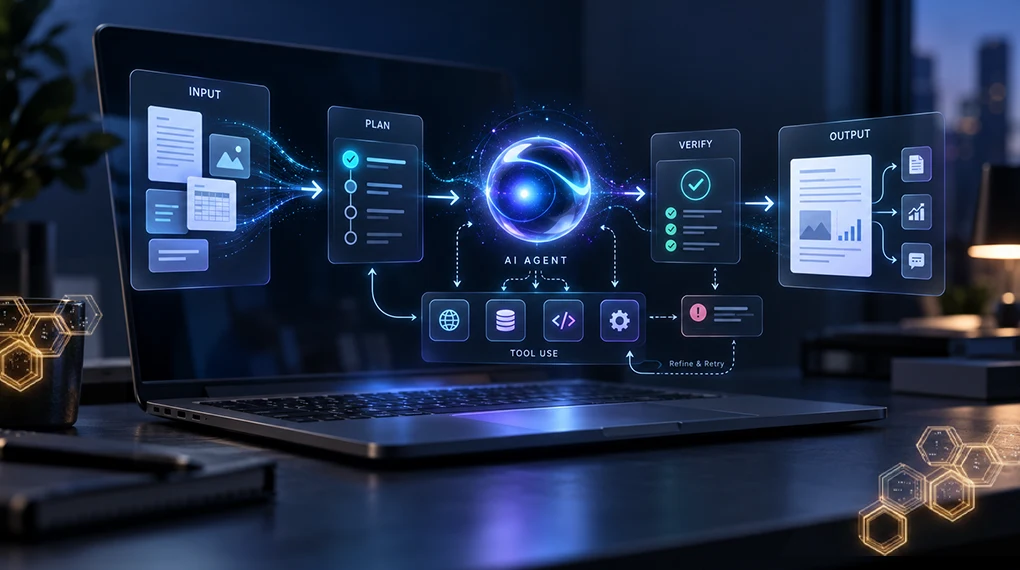
Taazaa's modernization platform operates through four specialized AI agents, each with a defined responsibility and a clear handoff to the next. This is not a single system generating code in isolation — it is a coordinated process that gives human decision-makers full visibility and control at every stage.
The Discovery Agent traces every dependency within the legacy architecture — identifying data stores, integration points, scheduled processes, and cross-system connections absent from existing documentation. Organizations frequently encounter dependencies they did not know existed. This map defines the scope of the modernization effort and establishes a sequenced approach to extracting and retiring components.
The Logic Extraction Agent converts implementation logic into business requirements. It separates the business rule from the technical mechanism used to execute it. The output describes what the system does in terms meaningful to business owners, not just engineers.
The Architectural Agent proposes a modern architecture aligned with the 12-Factor methodology. It does not reproduce the existing implementation in a new language — it synthesizes a new design appropriate to what the business actually needs, whether that means a microservice, a serverless function, or an event-driven integration pattern. Every proposal is reviewed and approved by a senior human engineer before any code is produced.
The Verification Agent runs each modernized component in parallel with the legacy system against real production data before any live traffic is redirected. Every output is compared. Any discrepancy is flagged for review. No migration is considered complete until the modern component has demonstrated consistent, verified equivalence with the system it replaces.
The Economics of Modernization
The financial case for modernization is often framed around the cost of the initiative itself. The more relevant question is the cost of not acting.
Industry research consistently identifies accumulated technical debt as one of the largest and most underreported financial liabilities on an enterprise balance sheet. The cost surfaces in delayed releases, escalating maintenance contracts, and engineering capacity that cannot be redirected toward growth.
Operational costs shift when fixed-infrastructure systems are replaced by cloud-native architectures that scale with demand. Organizations consistently report meaningful reductions in compute expenditure following successful modernization. Engineering productivity improves when new team members have access to documented specifications rather than having to reverse-engineer a system from first principles.
Delivery speed increases when teams work within well-specified, modular systems rather than trying to manage inherited complexity. Risk decreases when modernization proceeds one component at a time — each verified before the next begins — rather than through large-scale simultaneous replacement.
Governance and Human Oversight
A reasonable concern about AI-driven modernization is oversight — whether consequential architectural decisions are being made in ways that human leaders cannot inspect, challenge, or reverse. Layered governance ensures that AI agents accelerate execution without displacing human judgment on decisions that matter.
Strategic decisions require human approval before implementation work begins. The Architectural Agent proposes; a senior engineer approves. The specification does not advance until it has been reviewed. Tactical decisions — synthesizing compliant code against an approved specification — are handled by the agents.
Business owners review extracted business requirements to confirm alignment with current operational and regulatory needs. Technical leads evaluate architectural proposals against performance and security requirements. Compliance agents cross-reference reconstructed logic against applicable regulatory frameworks — GDPR, HIPAA, FINRA, SOX — depending on the organization's industry.
The incremental retirement model ensures the legacy system remains fully operational until each replacement component has been independently verified. No component retires until its replacement has proven equivalence under real production conditions.
From Inherited Complexity to Strategic Clarity
Modernizing with Agentic AI returns something most legacy-burdened organizations have not had in years: the ability to make deliberate architectural decisions. Systems that once resisted change become systems that can be extended. Markets that were inaccessible become viable.
In most enterprise technology environments, system-level knowledge is held by a shrinking group of individuals. When they leave, the organization loses not just the employee but the institutional memory that made certain systems safe to operate. Recovering that knowledge before it disappears is not a technology initiative — it is a business continuity decision.
Are you ready to turn your legacy systems into a strategic asset? Contact Taazaa today to learn more about modernization with agentic AI.
Frequently Asked Questions
Q: Is an agentic AI modernization approach limited to older technology stacks?
No. The methodology applies to any environment where system complexity has outpaced documentation — including Java monoliths, undocumented .NET platforms, or any architecture that has grown through incremental additions over many years. If the original design intent is no longer accessible to the current team, agentic AI can accelerate modernization.
Q: What does the engagement look like at the outset?
Rather than replacing legacy systems, AI-first modernization translates them over a 5-step, 6-week process. The first two weeks involve mapping data assets, identifying business logic embedded in code, and assessing the value of the historical data. The next two-week phase extracts the data, using AI-assisted tools to parse schemas, extract patterns, and identify rules. Over the final two weeks, we format the data for modern AI pipelines and validate it against known outcomes.
Q: What safeguards exist against incorrect logic reaching the new system? Incorrect logic cannot reach production without human review and parallel verification. Every specification is approved by a senior engineer before implementation begins. Every modernized component runs in parallel with the legacy system against live production data before any traffic is redirected. These are structural safeguards, not procedural ones.