Safeguard AI Shrinks Payment Cycles by 80%

Product Development

Key Takeaways

  • Manual audits were slow, costly, and prone to human error.
  • The client needed a scalable, automated solution to audit work completion, damage, and bid submissions.
  • Taazaa built an AI-powered solution that automated the entire process.
  • Processing time shrank by 80%, with over 98% accuracy.
  • Hundreds of work orders can now be processed simultaneously.

The Challenge

Safeguard Properties, a leader in mortgage field services, specializes in securing and maintaining vacant properties across the United States. Safeguard routinely inspects vacant homes for leaks, cracks, and other damage, then hires repair vendors to fix the issues inspectors find.

Repair vendors submit work orders, photographs, damage reports, and bid proposals before beginning work.

Auditing these submissions manually was slow, costly, and prone to human error. As a result, Safeguard’s lender and insurer clients faced delays in getting repairs done and inconsistent quality control.

Safeguard needed a scalable, automated solution to audit work completion, damage assessments, and bid submissions. It also needed to compare the results against the initial inspection reports and photos.

Their vision was a system that would classify tasks, validate images, evaluate bids against allowable limits, and highlight deviations.

Having worked with Taazaa before, they knew our team could bring their vision to life.

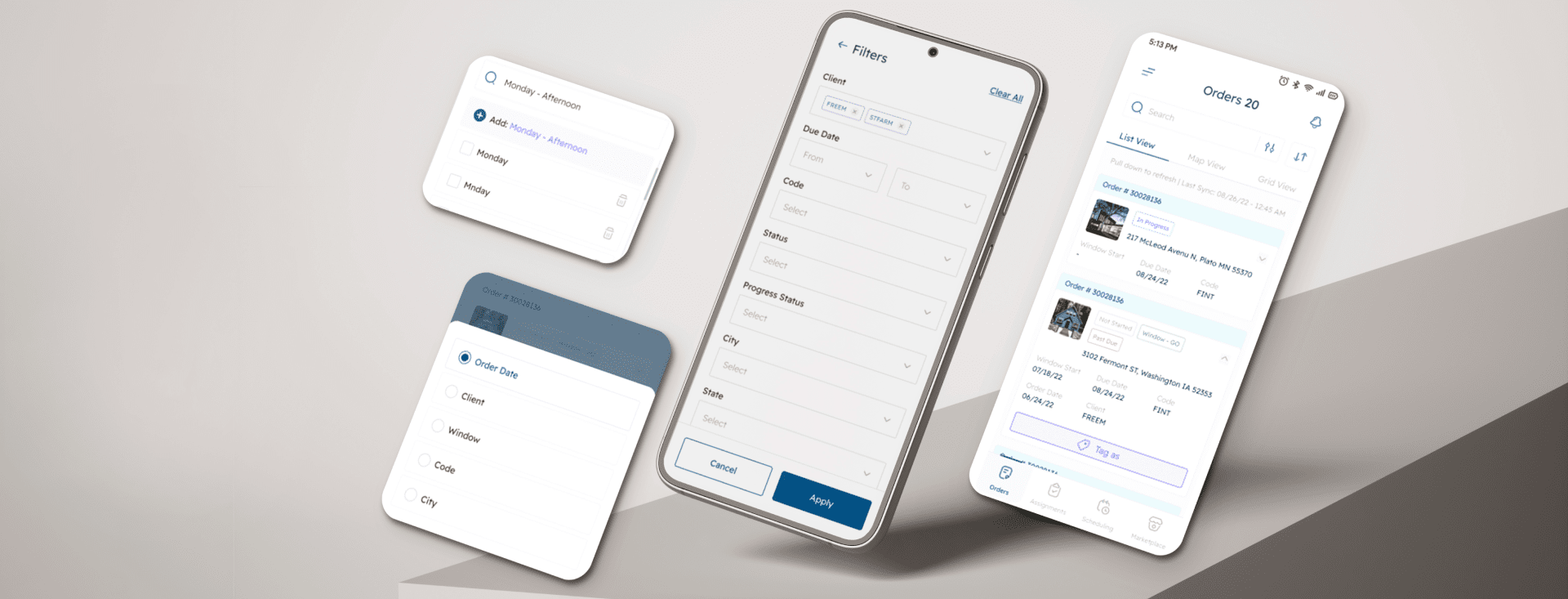
The Design

The Solution

Taazaa designed and built a solution utilizing AI-powered reasoning and transparent decision logic to accomplish all of Safeguard’s goals.

The application interprets images and text, classifies work codes, detects damage, and evaluates bid proposals using Google’s Gemini 2.5 model via LangChain.

To ensure traceability and auditability, the team used a normalized schema built with SQLModel to store tasks, images, prompts, allowable limits, and AI results.

Background jobs fetch work orders from Safeguard’s Service Bus, process each inspection stage in parallel threads, generate reports, and raise success events.

Custom prompts encode vendor guidelines, allowable categories, and decision thresholds. This keeps scoring consistent across work orders.

The audit workflow progresses through six stages. Each stage feeds into the next, ultimately producing a consolidated inspection report and AI decision.

Stage 1: Input Data

Work order information and images arrive via Safeguard’s Service Bus. A data‑fetching job loads tasks, images, and metadata into the database.

Stage 2: Work Completion

The LLM classifies images and vendor notes to verify that work aligns with allowed codes and quantities. It validates the attributes against allowable limits and generates an initial inspection report.

Stage 3: Damage Assessment

The AI analyzes damage images and descriptions. The system estimates the severity, flags missing items, and updates the AI decision for each repair task.

Stage 4: Bid Evaluation

The system fetches vendor bid proposals and compares them against predefined bid categories and punch‑code allowables. The AI determines whether to approve, adjust, or reject each bid.

Stage 5: Delta Analysis

To ensure consistency, the system compares new inspection results against previous inspection data, identifying unmatched stations and significant changes. The findings are updated accordingly.

Stage 6: Report and Decision

The system consolidates all inspection results into a report. It saves the final AI decision and raises a success event via the Service Bus to notify downstream systems.


The Results

The AI-enhanced solution reduced Safeguard’s audit processing time more than 80% by automating every stage of the property‑inspection process. Parallel jobs and LLM reasoning replaced manual audits, shortening vendor payment cycles.

In addition, the system maintains 98.24% accuracy compared to human evaluations. The new application ensures that non‑compliant submissions are caught, while compliant work is approved quickly.

The system’s logic is transparent. Versioned prompts and scoring rules provide auditable decisions and facilitate continuous improvement.

Modular stages and asynchronous jobs allow hundreds of work orders to be processed simultaneously while preserving data integrity.

The Safeguard AI transforms property‑inspection auditing from a manual bottleneck into a fast, reliable, and data‑driven process.

By harnessing the power of Google Gemini, structured data models, and workflow automation, the Safeguard solution not only protects workers and properties but also delivers measurable business value.

No items found.
No items found.

Design System

No items found.