

Key Takeaways
- Agentic AI systems act as digital FTEs in manufacturing, sensing, reasoning, deciding, and acting across interconnected processes within defined safety parameters.
- The three highest-value manufacturing use cases are process monitoring and control, operational excellence, and quality control.
- Over 40% of agentic AI projects will be canceled by the end of 2027. In manufacturing, the failure is almost always governance and integration, not the model.
Modern manufacturing generates enormous volumes of data, but often doesn’t use it effectively. AI is changing that in a big way.
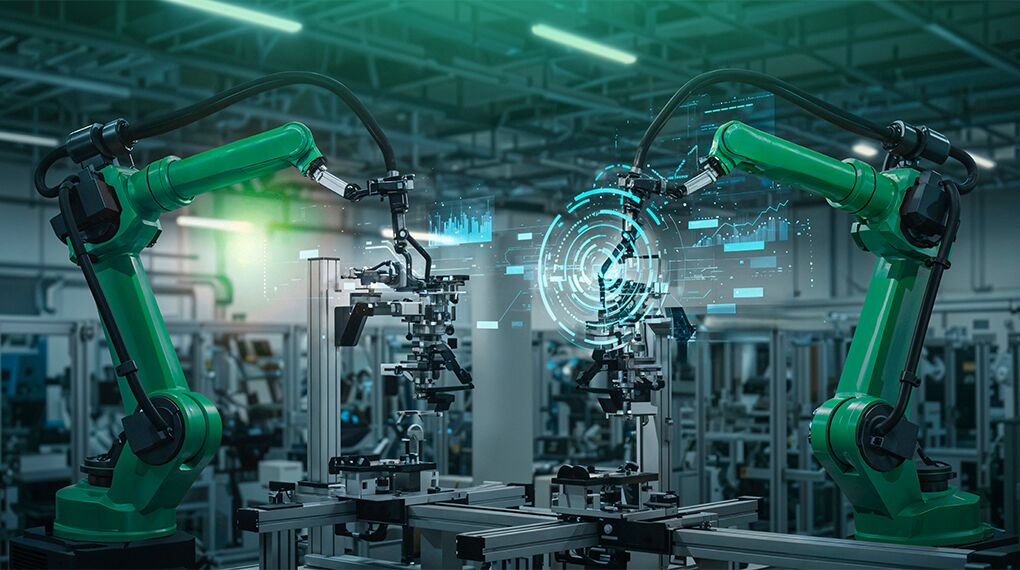
Agentic AI has opened the door to creating intelligent factories that consume all that data and use it to predict equipment failures, request preventative maintenance, coordinate repairs, shift schedules, and optimize outputs.
These intelligent factories have less downtime, lower maintenance costs, and greater productivity. It’s a level of efficiency that goes beyond what traditional digital transformation initiatives have delivered.
Agentic AI on the Shop Floor
Traditional AI agents are task-oriented and reactive. For example, a vision system that flags defects has limited autonomy; it doesn’t adapt or coordinate with other systems.
Conversely, an agentic AI can set subgoals, plan multistep actions, collaborate with other agents or humans, and learn from feedback. It’s not just executing predefined tasks.
In a factory setting, that means detecting an anomaly, cross-referencing it against production schedules, coordinating with a maintenance scheduling agent, adjusting the production sequence, and logging the full decision trail. And agentic AI systems perform all of this without a human directing each step.
Where Agentic AI Can Make an Impact
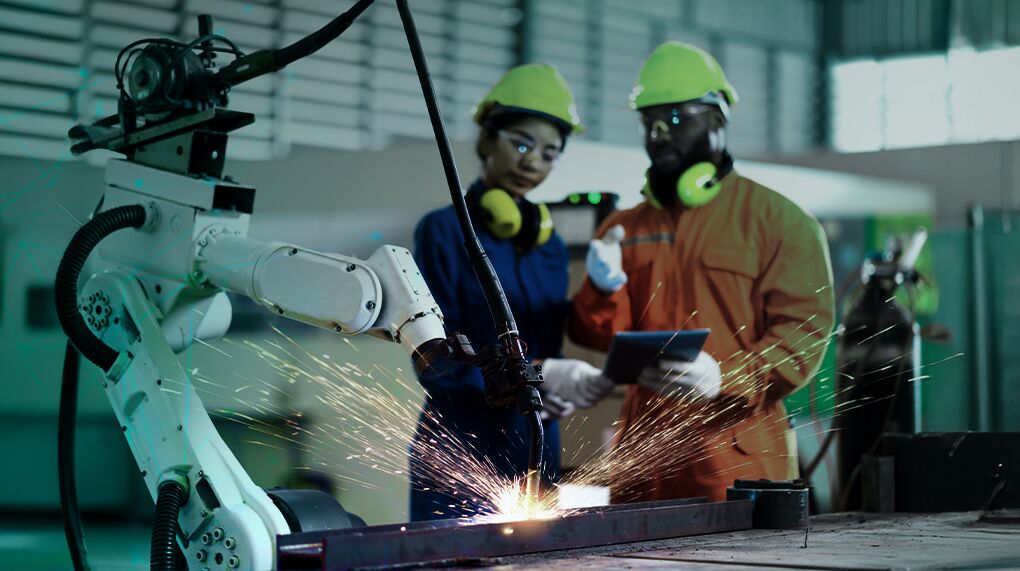
With the proper orchestration layer in place, agentic AI can automate workflows, collect and analyze data, and monitor facility-wide operations for greater efficiency, agility, and quality. A few examples of where agentic systems can have an impact include process monitoring and control, operational excellence, and quality control.
Process Monitoring and Control
Multi-agent systems coordinate specialized agents to optimize production. For example, one agent validates orders and initiates tracking, another allocates parts and labor and adapts to disruptions, and a third ensures just-in-time delivery of components. The orchestration layer manages the handoffs.
Operational Excellence
Control-based agents monitor and adjust equipment in real time to improve efficiency and safety. For example, process monitoring agents track production and trigger alerts. A process analysis agent identifies trends, eliminates bottlenecks, and optimizes resource allocation. The result is an operation that responds to conditions as they change rather than waiting for a shift review.
Quality Control
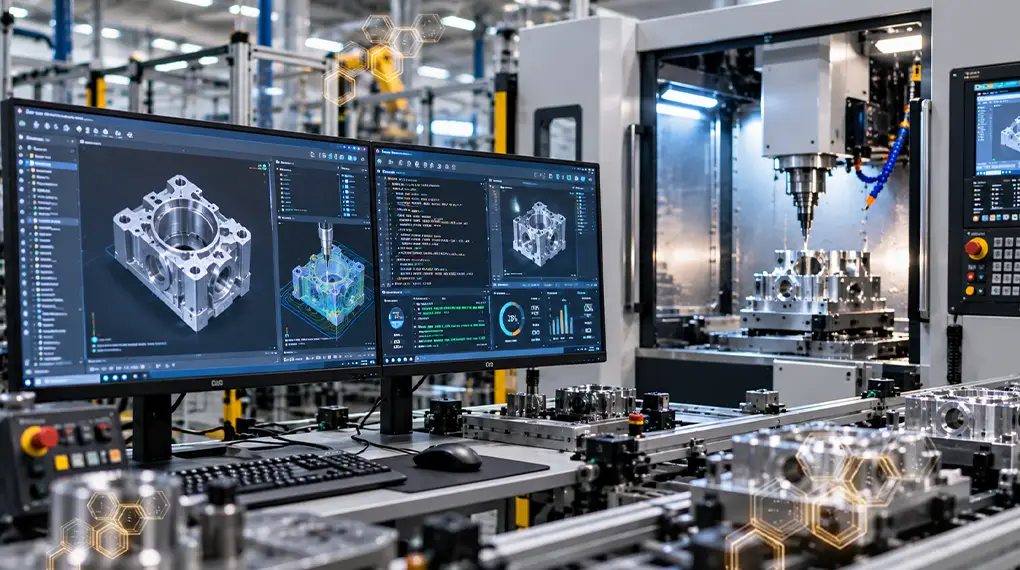
Agentic AI can be deployed as quality assurance agents to inspect components at multiple stages. When defects surface, an audit and analysis agent traces root causes and generates compliance-ready reports, replacing a labor-intensive manual process with a documented, auditable workflow.
Determining How to Deploy Agentic AI
There are many more such use cases for agentic AI in manufacturing. Manufacturers may not know where to begin or even where opportunities exist to leverage the technology. Two dimensions determine which manufacturing workflows are worth targeting first: agentic AI relevance and business value.
Agentic AI Relevance
When evaluating relevance, consider the following:
- Coordination complexity: What is the level of orchestration required? Will the AI need to touch multiple systems, decision layers, or roles?
- Real-time responsiveness: Does the workflow require adaptive, minute-by-minute decisions?
- Autonomy potential: Can tasks be delegated to agents within defined guardrails?
Business Value
How will the AI impact efficiency, cost, quality, or competitive advantage?
Workflows that score high on both are the right starting point. Predictive maintenance, production scheduling, and quality control consistently rank highest across manufacturing environments.
Taazaa's guide to agentic AI design patterns covers the architectural patterns that map to these workflow types, as well as the failure modes each is designed to prevent.
Other Agentic AI Considerations
Effective agentic AI solutions for manufacturing require knowledge that many internal teams lack. While they may have the talent to build agentic systems, their lack of experience doing so can lead them to significantly underestimate the effort required. As a result, the initiative may exceed its allotted budget and timeline, stalling the project.
One way to avoid this is to engage a forward deployed engineer (FDE) with the necessary experience. An FDE works alongside the internal team to select the right use cases, design the architecture, and facilitate development and deployment.
With or without an FDE, however, the organization must address several considerations.
Identify and Prioritize Use Cases
Identify high-impact use cases for pilot projects by examining each use case’s relevance and business value.
Define a Scalable Agentic Architecture
Successful agentic AI pilots often fail when deployed to the production environment because the architecture isn’t designed for scalability. Include a robust orchestration layer to prevent drift, enhance governance, and ensure the agentic system can handle the increased amount of data, users, and requests.
Implement Shared Context
Develop a semantic network of real-world entities such as objects, events, situations, or concepts, and define the relationships between them. This creates a shared understanding that facilitates the coordination among agents.
Create the Supporting Infrastructure
Install high-bandwidth connectivity, edge computing abilities, and low-latency networks in the facility to enable real-time alerts and decision-making.
Establish Strong Governance
Implement dashboards for human-in-the-loop oversight. Integrate compliance checks and supervisory controls within agentic AI workflows.
Facilitate Change Management and Worker Upskilling
Develop training and change management programs to overcome hesitancy, knowledge gaps, and bias. This helps foster adoption and minimize the impact on operations.
The Harness That Connects AI to the Shop Floor
An agentic manufacturing system is a collection of tools, permissions, feedback loops, guardrails, and observability infrastructure that governs how AI models interact with real manufacturing systems. These form the harness that makes agentic AI work in the production environment.
Without a well-designed harness, agents either fail to take useful action (too constrained) or take action they should not (too permissive). In manufacturing, both carry real operational consequences.
A system prompt telling an agent not to adjust machine parameters beyond a defined range is a behavioral control. A permission boundary enforced at the infrastructure layer that prevents the agent from sending out-of-range commands is an infrastructure control. Only the second is an actual safeguard.
Taazaa's guide to harness engineering covers how the three harness layers apply to production AI deployments where uncontrolled agent behavior has physical consequences. The eight building blocks and seven failure modes most common in real deployments are covered in Taazaa's guide to the AI agent harness.
Learn more about Taazaa's AI engineering services.
Frequently Asked Questions
What is agentic AI in manufacturing?
AI systems that sense conditions, reason about goals, coordinate across agents and systems, and act within defined guardrails, without human intervention at each step.
What are the highest-value manufacturing use cases?
Process monitoring and control, operational excellence, and quality control. All three share high coordination complexity, real-time responsiveness requirements, and measurable outcomes.
How is agentic AI different from traditional manufacturing automation?
Traditional automation executes predefined sequences and breaks on exceptions. Agentic AI handles exceptions by reasoning, adapting, and coordinating across systems, within the boundaries the organization defines.
Why is governance more critical in manufacturing than in other industries?
Because the consequences are physical. An incorrect decision in a software workflow yields an incorrect answer. In a manufacturing environment, it can stop a production line, create a safety event, or ship a defective product.
Where should manufacturers start with agentic AI?
With workflows that combine high coordination complexity, real-time responsiveness, and clear measurable outcomes. Predictive maintenance, production scheduling, and quality control consistently meet all three criteria.